Ryan Hellyer

Research Papers

Chemistry research from my early career — coordination polymers, pyrazine-based ligands and molecular self-assembly, published between 2006 and 2017. PDF copies can be provided on request.

Chemistry – A European Journal 23(57), 14193–14199

Self-Assembly of Cyclohelicate [M₃L₃] Triangles Over [M₄L₄] Squares, Despite Near-Linear Bis-terdentate L and Octahedral M

Hogue, R. W.; Dhers, S.; Hellyer, R. M.; Luo, J.; Hanan, G. S.; Larsen, D. S.; Garden, A. L.; Brooker, S.

My plan was to make molecular squares. I'd designed a rigid ligand, checked it on a plastic model, and everything said it would click together into neat squares with iron. The usual tests agreed with me. Then the X-ray crystal structure came back looking wrong, and my supervisor Sally Brooker smiled and said, "I think I see what happened — this is exciting!" Out popped a beautiful triangle. I'd set out to build a square and accidentally built the wrong shape. As Doc Brown would put it, I wasn't thinking fourth dimensionally — invisible entropic forces had squeezed the reaction into a smaller molecule. It made the journal's front cover.
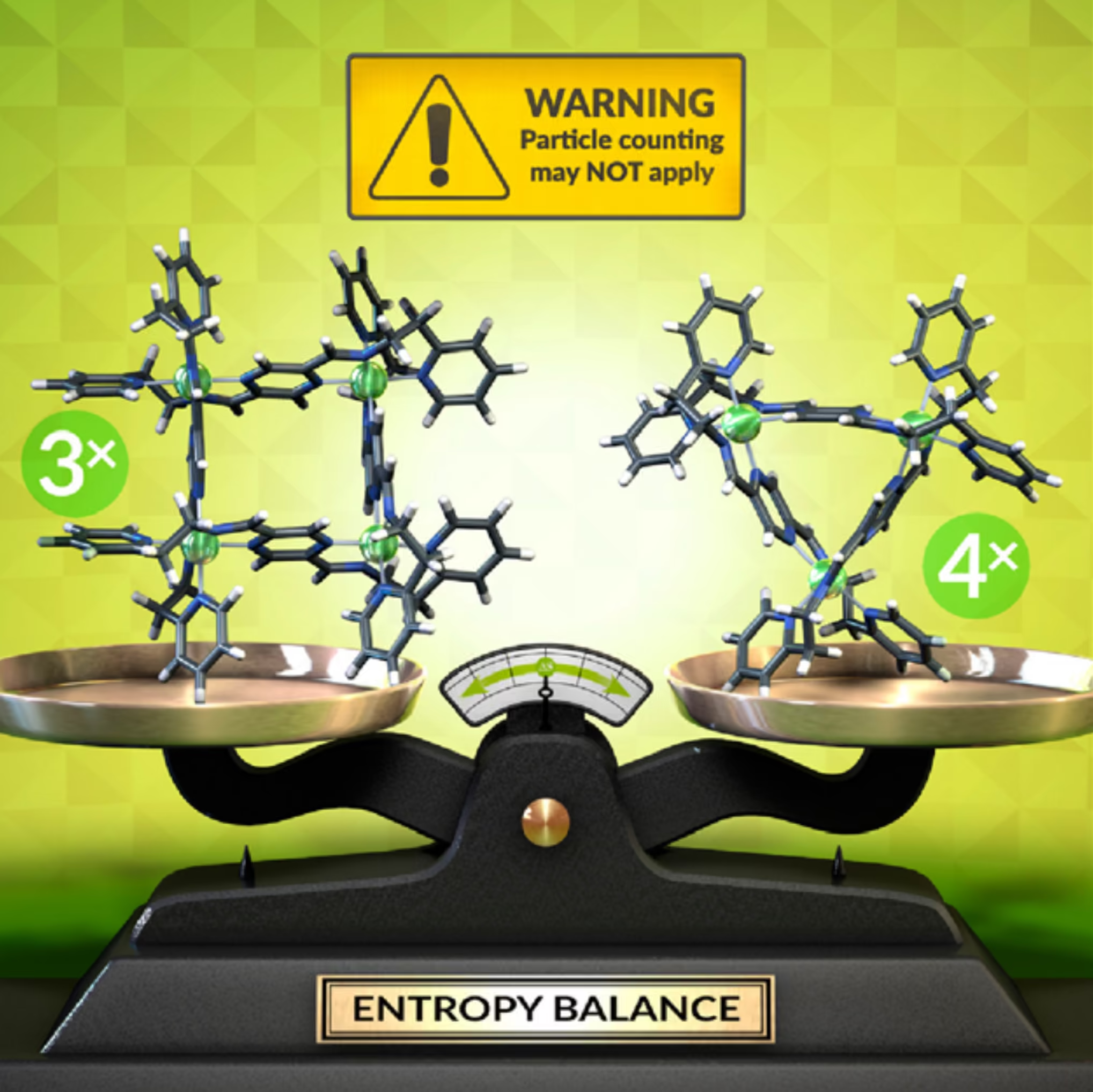
Front cover of the journal issue featuring the self-assembly of cyclohelicate triangles

European Journal of Inorganic Chemistry 2009(9), 1162–1171

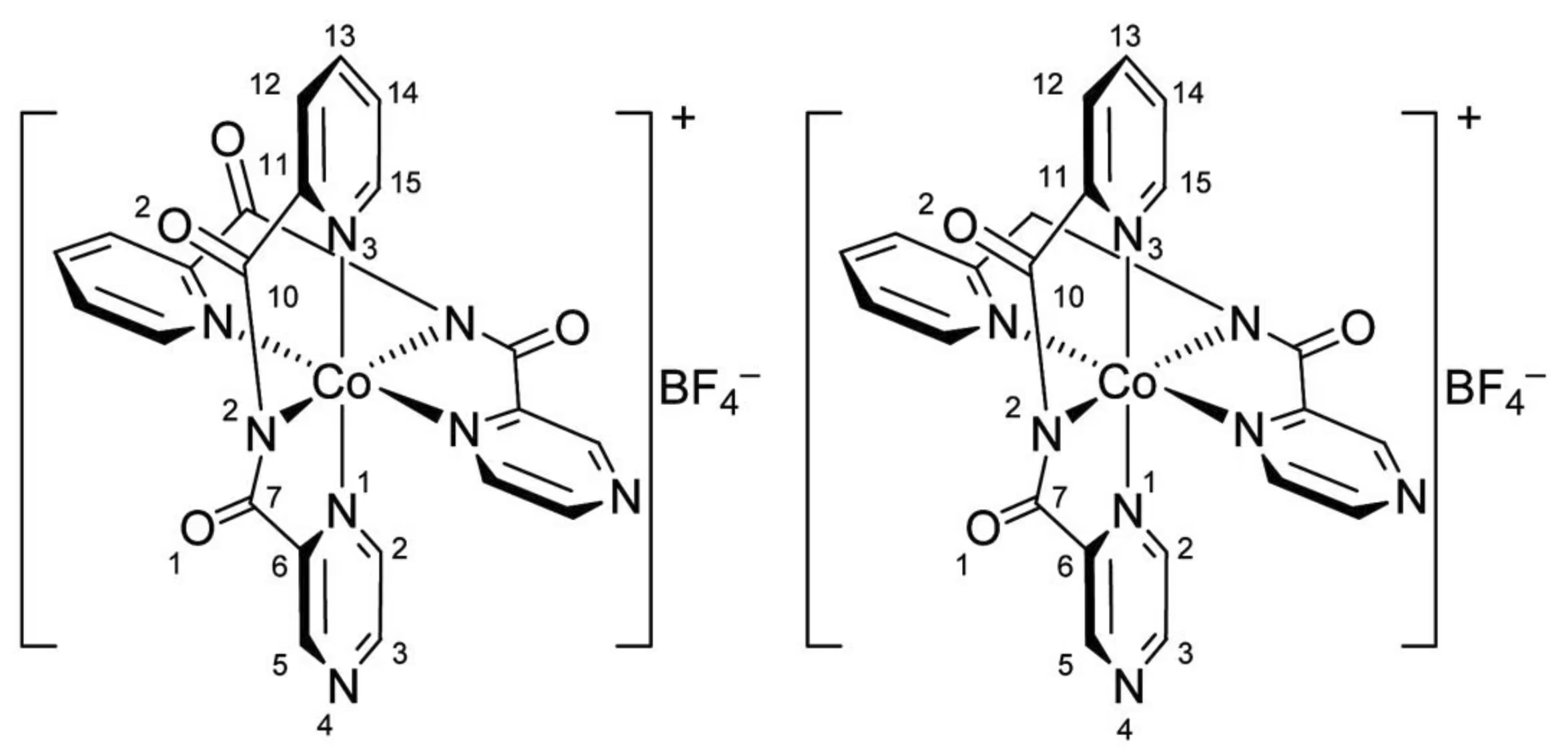
Cobalt and Silver Complexes of Terdentate Pyrazine-Based Amide Ligands and Assembly of Monocobalt Building Blocks through a Silver Connector

Hellyer, R. M.; Larsen, D. S.; Brooker, S.

This was another paper with Sally Brooker, and it's one of my favourites because it started as an idea other people thought was a bit silly. I was meant to be making cobalt complexes, but I had what Sally seemed to regard as a slightly hair-brained notion: rather than a molecule with a single metal at its heart, build one containing two different metals. Mixed-metal complexes like that are much less common in the literature, and there's usually a good reason — they're awkward to make behave. I mixed in some silver in a few different ratios and, to my delight, out popped some genuinely beautiful-looking crystals. I sent a sample for microanalysis, half expecting to be told I'd made a mess, and the values aligned perfectly with a cobalt-and-silver mixed-metal complex. Then I ran an X-ray crystal structure, and there it was: two beautiful cobalt complexes connected by silver ions. I was stoked. Dave Larsen, our nearby organic chemist, provided a lot of much-appreciated assistance with the ligand synthesis — the fiddly organic half of the job — and it wouldn't have come together without him.

Structure of the cobalt and silver pyrazine-amide complexes

Acta Crystallographica Section C 63(6), o358–o360

4-(Pyrrol-1-yl)-1,2,4-triazole

Hellyer, R. M.; Joule, J. A.; Larsen, D. S.; Brooker, S.

This paper is a good reminder that not every piece of work is a breakthrough. It's a simple triazole compound that I'd made for use in something else entirely. It wasn't the point of my research, but I found myself thinking it would be a shame not to get a paper out of it, so I pushed for us to write it up. My supervisor, Sally Brooker, wasn't very excited about the idea — it's a modest compound and a modest paper — but she went along with it, and generously let me be the first-named author. That meant a lot to a student. Our neighbour in the building was an organic chemist called Dave Larsen, who had helped a good deal with the synthesis of the compound, so he was included on the author list as well. It's a nice little snapshot of how lab life works: someone helps you with the thing they're good at, you write it up together, and a paper appears that wouldn't otherwise have existed.

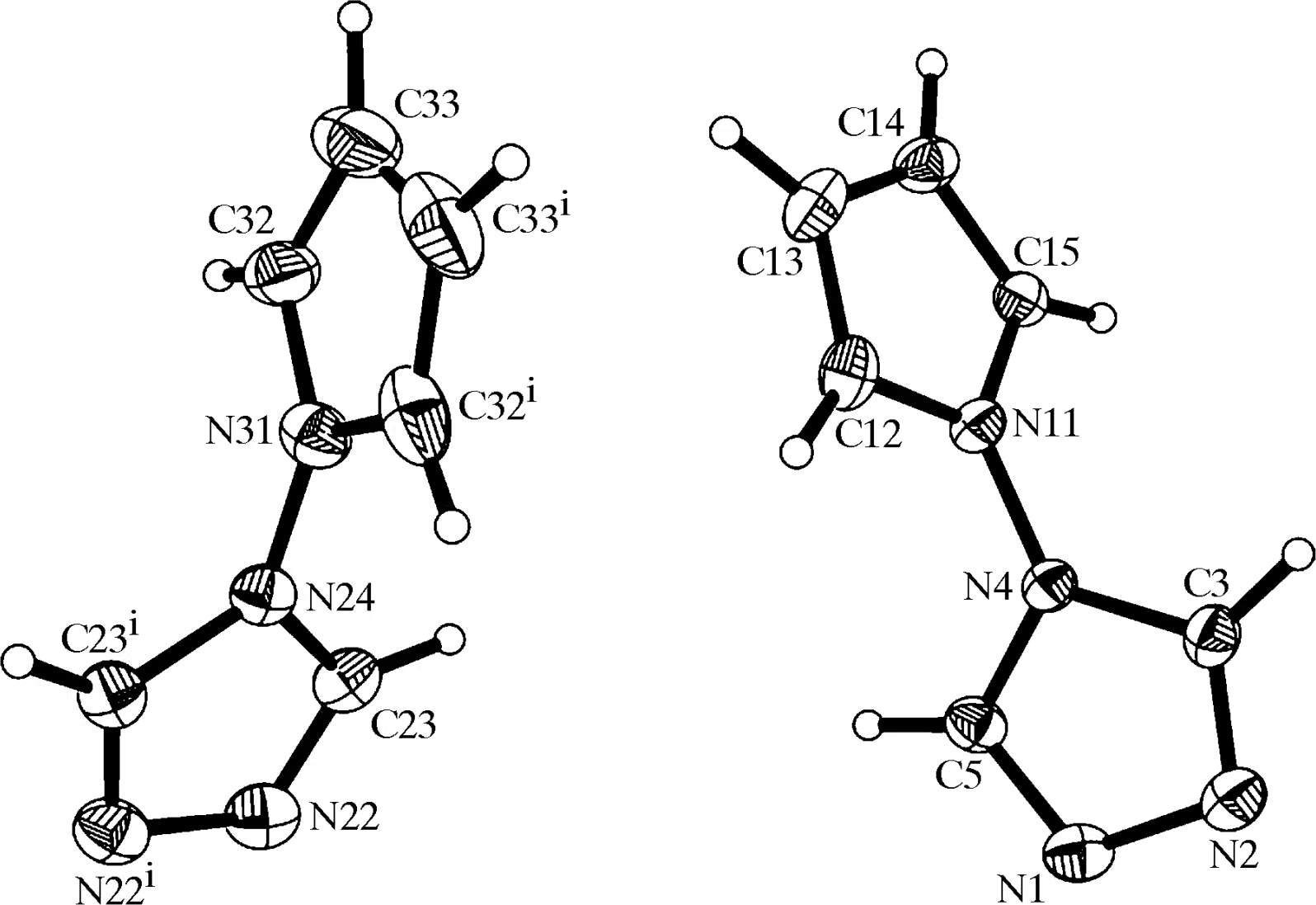
Crystal structure of 4-(pyrrol-1-yl)-1,2,4-triazole

Canadian Journal of Chemistry 84(9)

Some Oxidation Products of Lycoctonine Revisited

Abdelrahman, D.; Benn, M.; Hellyer, R.; Parvez, M.; Edwards, O. E.

I spent a period working in the lab of emeritus professor Mike Benn at the University of Calgary, and I learned an enormous amount of chemistry from him — not least how much it matters to start with immaculately clean starting materials and glassware. Our fieldwork was a trip out into the Kananaskis country to collect a plant called Delphinium brownii, which Mike held a permit for. It had a reputation for killing cattle, and ranchers were quick to report deaths — until Mike chatted to some of them, and they laughed and admitted that mostly the cows just got a little sick. Reporting them as dead earned a government rebate, and they weren't allowed to kill the plant anyway, since it's native to the area. The plant's valuable ingredient was a compound called methyllycaconitine, which Mike extracted to help bankroll his research programme. I made a lot of it for him. When we got back to the lab he stashed it, unlabelled, in his office drawer to stop anyone stealing it — I always thought that was a bit silly, since a chemical belongs in a lab. This paper is about some extra compounds I found along the way: not thrilling chemistry, but genuinely new things that hadn't appeared in the literature before.

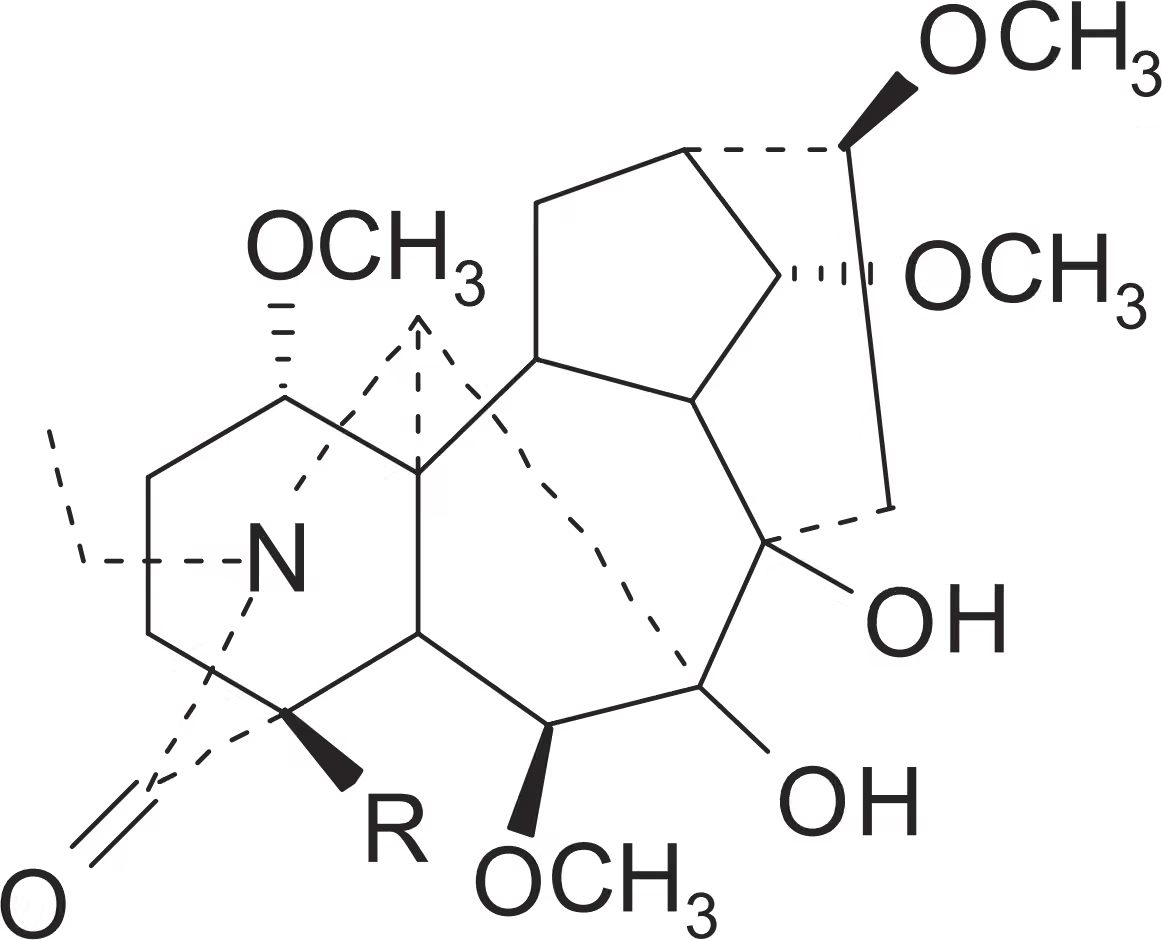
Oxidation products of the alkaloid lycoctonine

Inorganica Chimica Acta 359(11), 3659–3665

Structural Variations in Copper(I) Iodide Coordination Polymers of Sulfide and Disulfide Containing Flexible 3-Substituted Pyridine Ligands

Hanton, L. R.; Hellyer, R. M.; Spicer, M. D.

This was part of my Masters at Otago, and honestly it was a bit of a fail. The goal was to grow spring-like helical molecules: a floppy ligand, with a flexible sulfur bridge in the middle, that would coil around a central metal spine. It was well before we could model molecules easily on a computer, so we tested the design on plastic ball-and-stick models and passed them around the lab. On the model, it looked perfectly viable. The molecule disagreed. It refused to hold its shape and repeatedly degraded into brown goop, and the helix never happened. Looking back, I suspect the fix was simple: converting it to a hydrochloride salt would probably have stabilised it, and then I could have purified that. Instead I rebuilt the same ligands with the nitrogen in a different position, which was far more stable and gave the compounds in this paper. I also made a version that was more stable again, but ran out of time at the end of my Masters to finish that work. Post-doc Paula Caradoc-Davies taught me most of my basic lab skills, and my supervisor Lyall Hanton, who came up with the plan, was endlessly supportive.

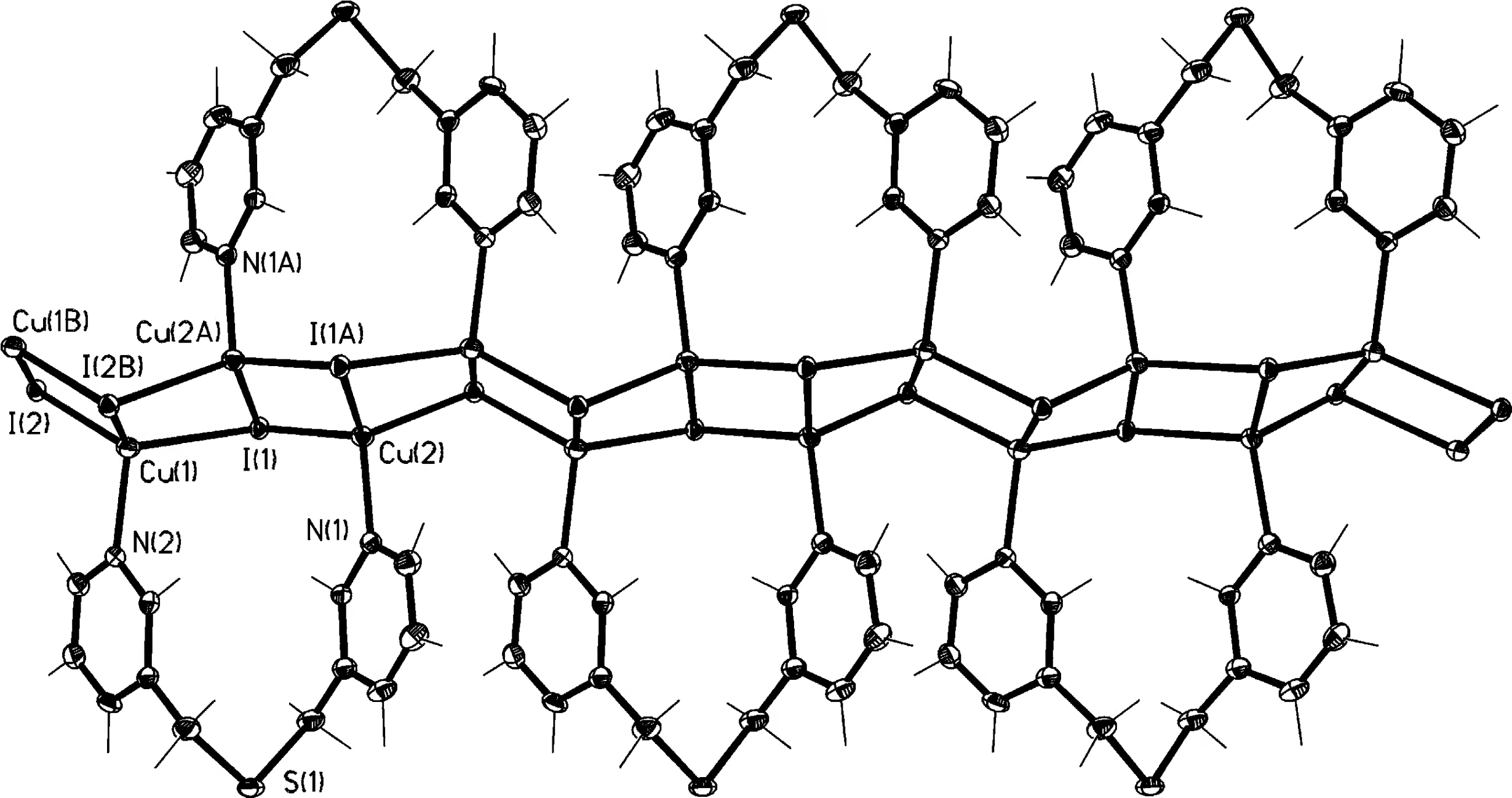
Copper(I) iodide coordination polymer structures